August 24, 2026 · Joy
Training my own AI while coding agents run
I run coding agents every day. I also train my own models on a separate box — SSH Joy.
That combination sounds normal until you live in it: long GPU jobs in the background, three or four agent harnesses in the foreground, terminals dying mid-run, and every harness trying to carry its own copy of execution history in the next prompt.
The pain was not “AI is slow.” The pain was lost execution state and duplicated context eating RAM, swap, and attention while the training job still needed the machine.
The setup
- SSH Joy (training server) — model fine-tuning / training runs that need steady GPU and RAM headroom
- Coding agents — Codex, Claude Code, Gemini, others, often at the same time
- Disposable terminals — the default runtime before JoyMux
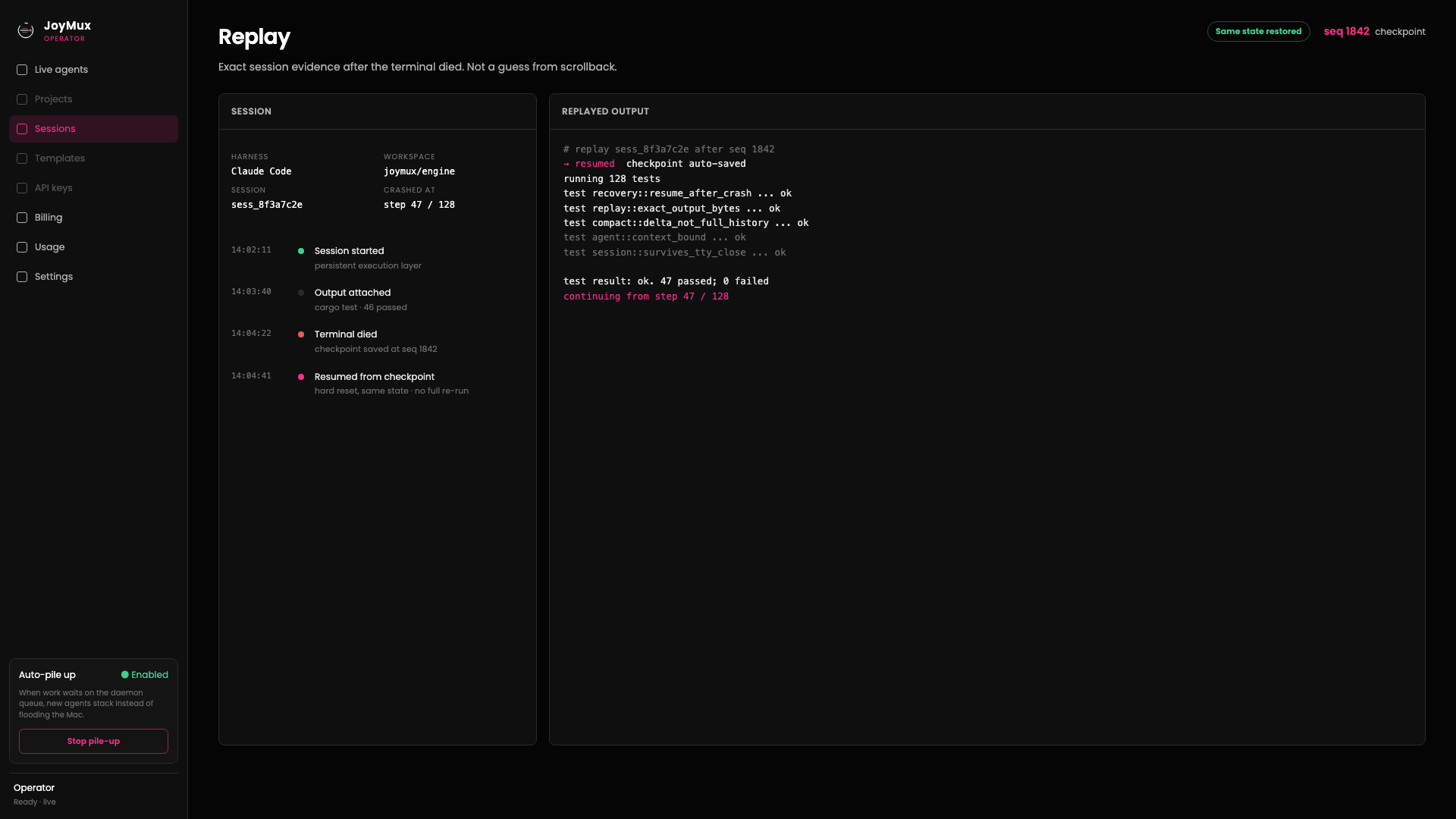
When a terminal died during an agent task, I paid twice: once in tokens to reconstruct the work, once in machine pressure from duplicated scrollback and parallel sessions.
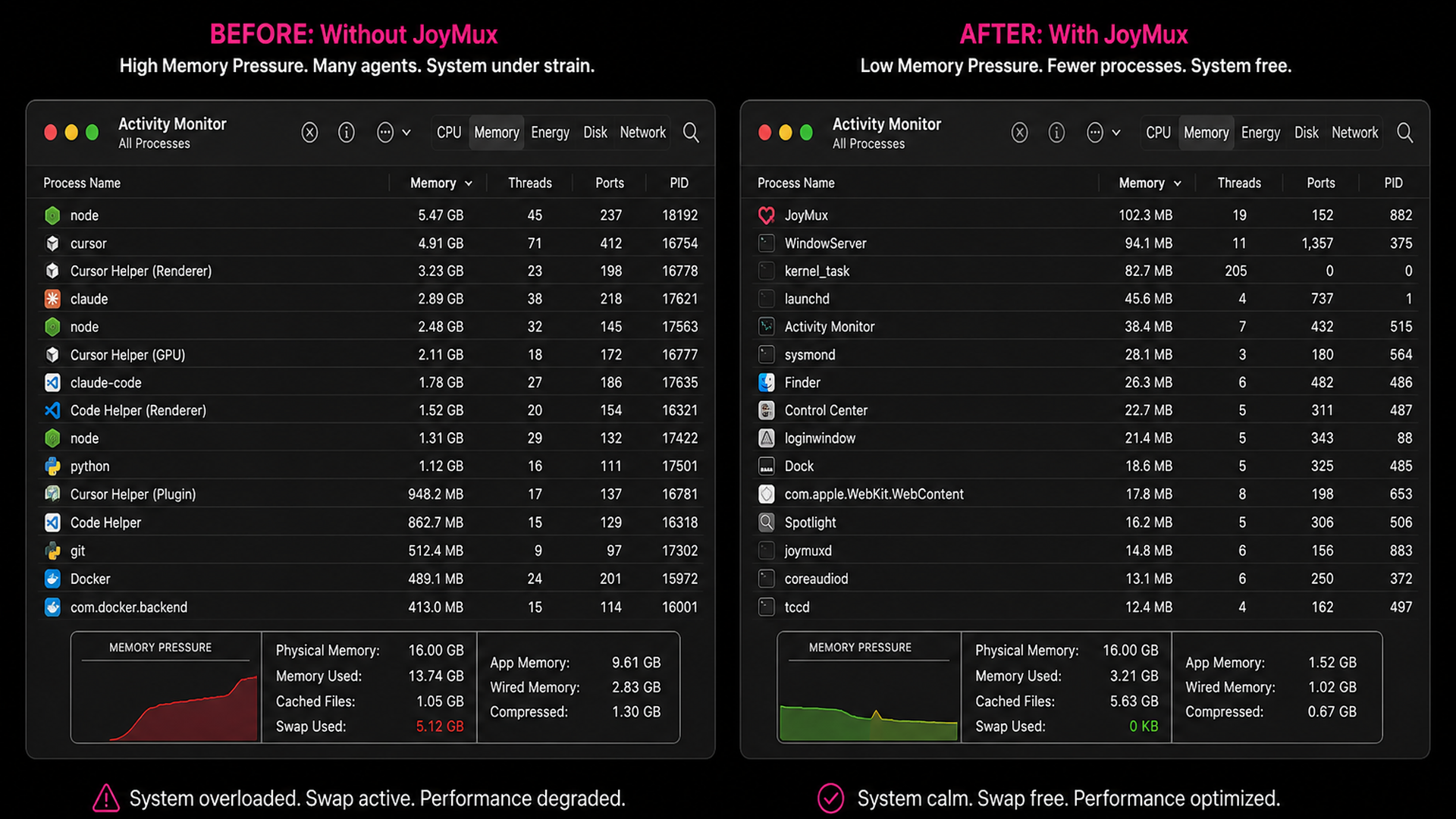
Founder-operator run: training workload + agent sessions. JoyMux kept execution state off the conversation and bounded what went back into each prompt.
What changed with JoyMux
JoyMux moved execution knowledge out of chat history and onto the machine:
- Resume instead of restart — a crashed agent session did not mean reconstructing the task from memory
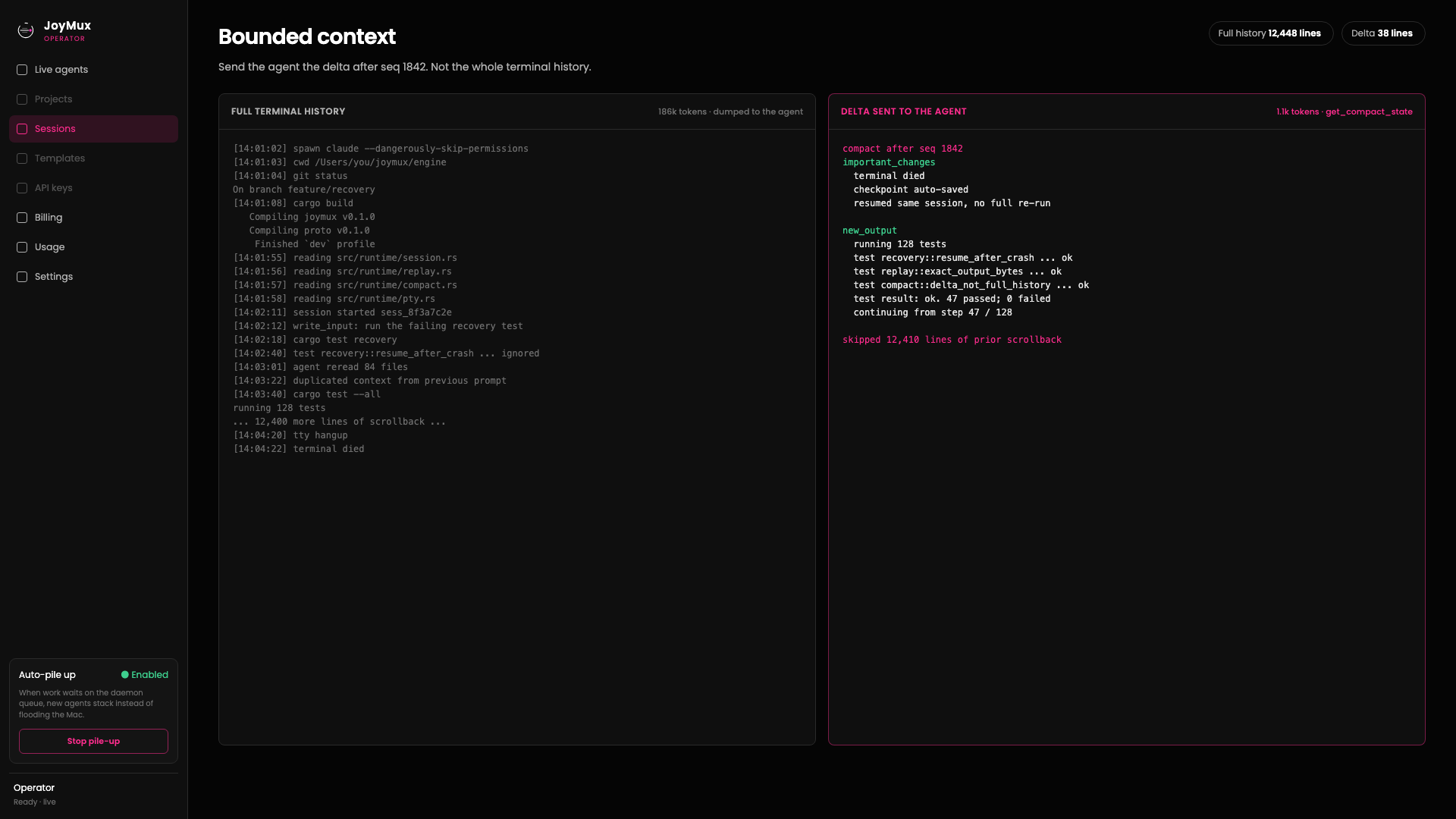
- Send the delta — bounded context views instead of dumping full terminal scrollback into every harness
- One execution record — separate sessions, same local layer across harnesses
The machine getting cooler and lighter under pressure was a side effect — fewer duplicated contexts and less pile-up — not a separate “optimization SKU.” I did not build JoyMux to sell GPU throttles. I built it so execution state would survive.
Mac pressure (the same pattern)
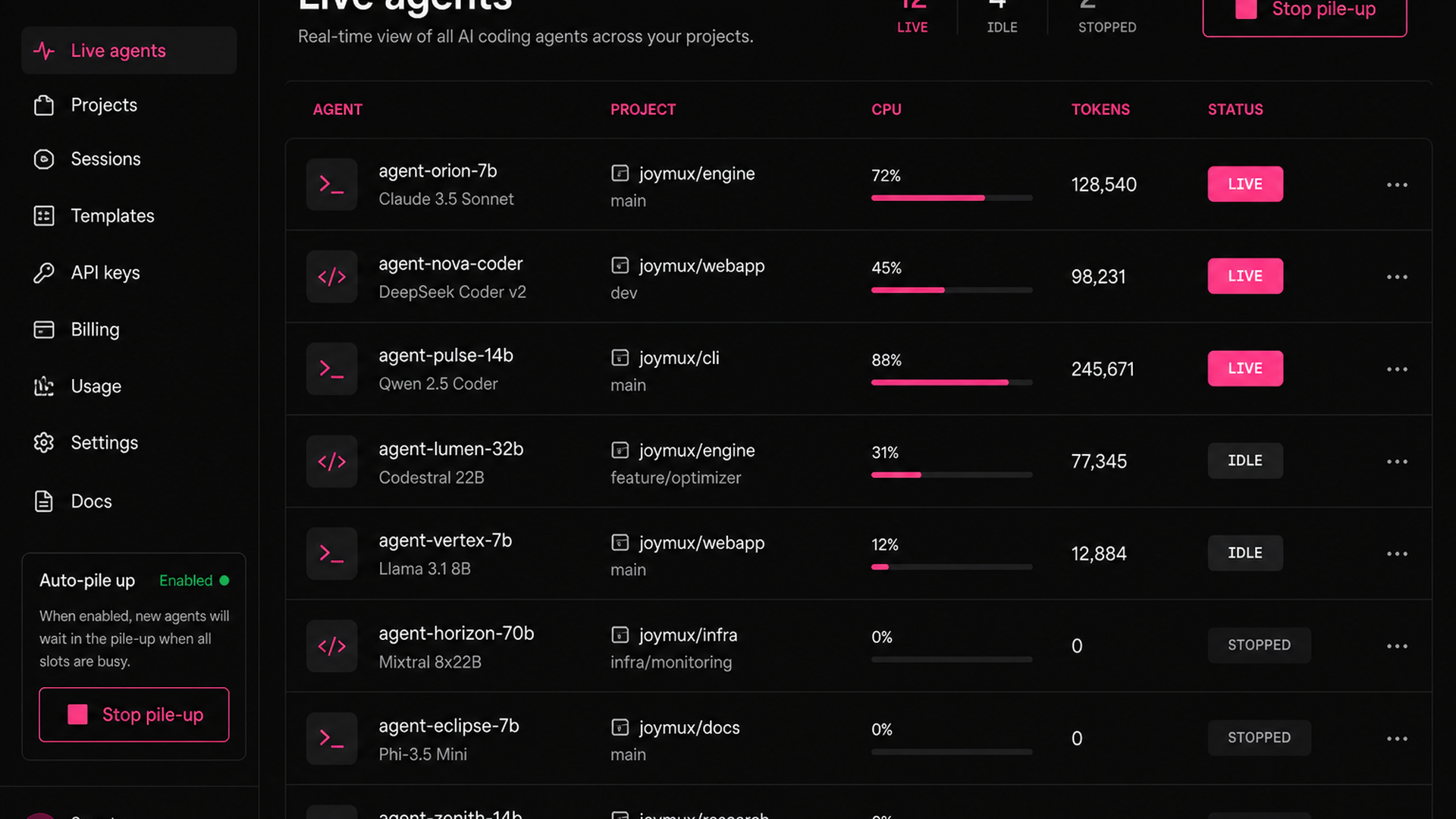
The same anti-pattern showed up on my daily Mac before JoyMux: ~78 local agents vs 2 cloud, memory and swap pinned, day peaks in token burn when every harness owned its own history.
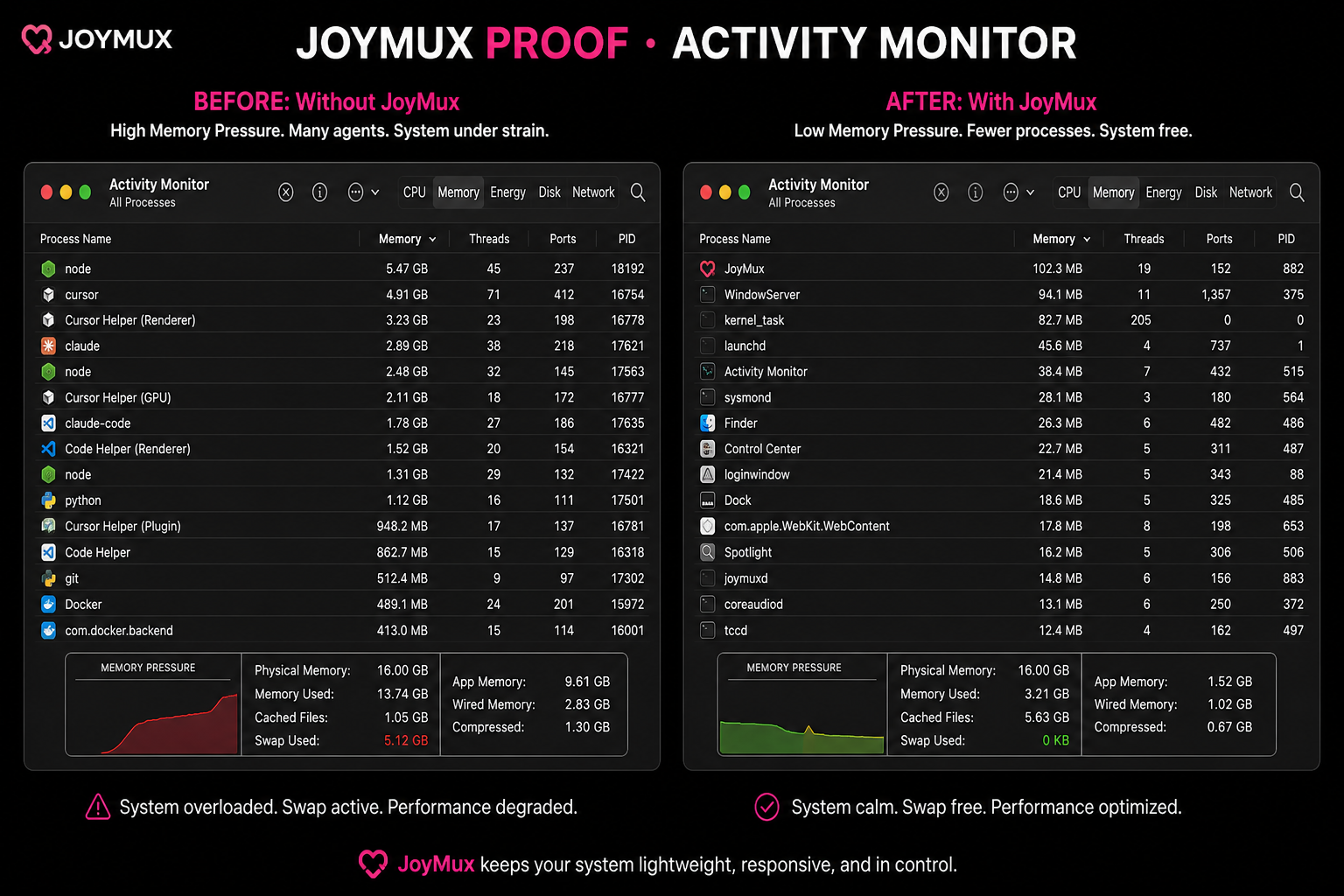
Before: multi-agent pile-up and swap pressure. After: shaped context and durable sessions — calmer machine, less re-burning tokens on work already done.
In founder testing, shaped context and fewer wasted full reruns produced about 10× token improvement. Say “about 10×,” keep it secondary to resume/replay/deltas, and read the honest metering note.
Operator views (what you actually see)
Resume after disconnect:
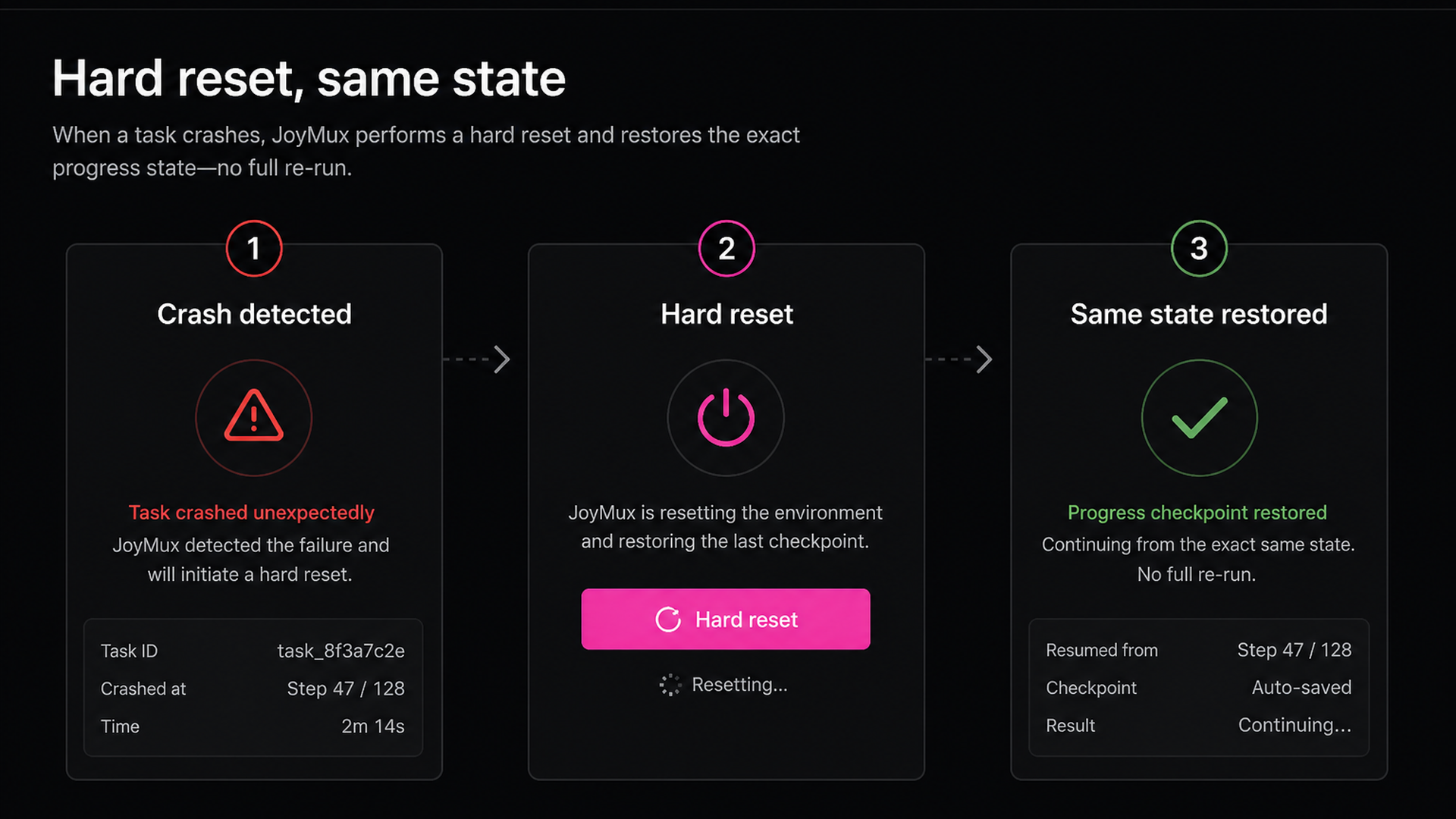
Replay missed output from evidence:
Bounded context delta vs full history:
Live sessions across harnesses:
What this does not promise
- JoyMux does not replace your training stack or pick models for you
- It is not an orchestrator that routes tasks between agents automatically
- Calmer GPU/RAM is an observed outcome on my runs, not a guarantee on every machine
If you train models and run agents on the same hardware, the question is whether chat history should be your database for the computer’s state. JoyMux’s answer is no.
Start a 14-day free trial — then $29/month. Cancel anytime.